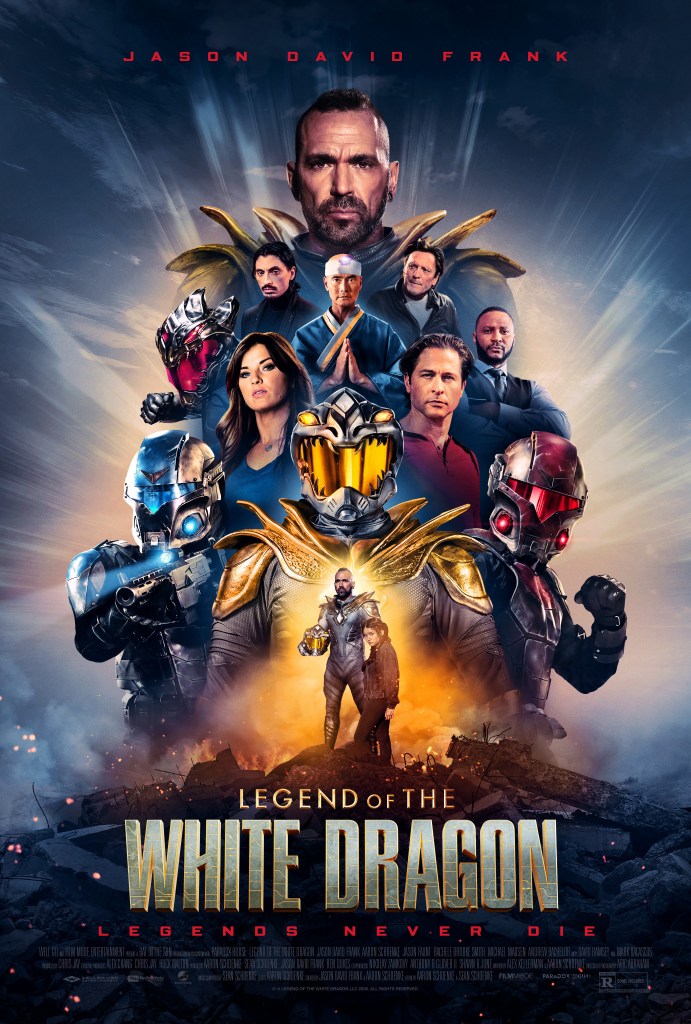
2026 has certainly been an interesting year for Mighty Morphin’ Power Ranger (MMPR) alumni projects. Earlier this year we had the Johnny Yong Bosch directorial debut ‘Spades’ starring MMPR’s Jason Narvy in the lead role and now, after several years of delays and issues we are finally getting a chance to see what the world makes of Bat in the Sun’s ‘Legend of the White Dragon’ (LOTWD).
For those unaware, Bat in the Sun Productions is a, audio/visual company founded by Sean Schoenke and Aaron Schoenke back in 2001 where they mostly specialised in producing fan films until they found a breakthrough project in partnership with ‘Machinima’ for the series ‘Super Power Beat Down’ which saw them taking characters from existing films and video games and having them battle.
Fast forward to 2019 and after a couple of misfires and cancellations it was time for Aaron to make his directorial debut for a feature film, and it would star MMPR’s very own Jason David Frank, better known to fans as Tommy Oliver. After a kickstarter that fell $296,023 short of it’s goal a new version of the project was launched in 2020 and this time they raised $508,618 and secured outside investment to make this feature a reality. Now 6 years later the film is releasing in select theatres August 28th.
Legend of the White Dragon is a strange experience. To be clear, despite what some viewers may still assume, this is not a Power Rangers movie. Although it features familiar faces such as Jason Faunt (Power Rangers Time Force), Cerina Vincent (Power Rangers Lost Galaxy), and Ciara Hanna (Power Rangers Super/Mega Force), none of them are suiting up in spandex or posing in front of exaggerated explosions. Instead, the film makes another attempt to take the broader Power Rangers concept in a darker direction, hence the R rating. In practice, however, that approach does not quite work. The characters swing so often between edgy and corny that the film’s intended tone becomes difficult to pin down, from the opening rock montage of Eric Reed’s (Jason David Frank) supposedly miserable life to the abrupt arrival of King Bach as a hologram, a character who feels carried over from an earlier, more light-hearted version of the script.
The production’s biggest issue, however, is the story. Much of the runtime is devoted to flashbacks, and while King Bach’s character feels imported from an earlier draft, those flashbacks can seem like scenes from a different film that should have come first. The narrative lurches along, constrained by too little room to develop, before abruptly turning into a barrage of exposition where major events pile up so quickly that the viewer is left with mental whiplash. What makes this frustrating is that there are glimpses of a decent story beneath it all. It may not be ground breaking, but there is a solid foundation here. Unfortunately, the strongest beats are not given enough space, while others are too thin to support the weight placed on them.
This is likely due to the significant reshoots that followed the unfortunate passing of Jason David Frank (JDF). Some characters appear to have been removed entirely or had their screentime adjusted to fit the revised version, while others were added to smooth the transitions, with mixed results. One major fight is clearly stitched together from two different cuts and includes a stunt performer standing in for JDF during a moment where a cinder block is broken over his head. The same issue is noticeable in the ADR. Several of Eric Reed’s lines are lifted from JDF’s previous work with Bat in the Sun. Given the circumstances, this was probably preferable to relying on AI, but it still creates a noticeable shift in character, as Eric moves from depressed and tormented to more upbeat, even quippy, whenever he suits up.
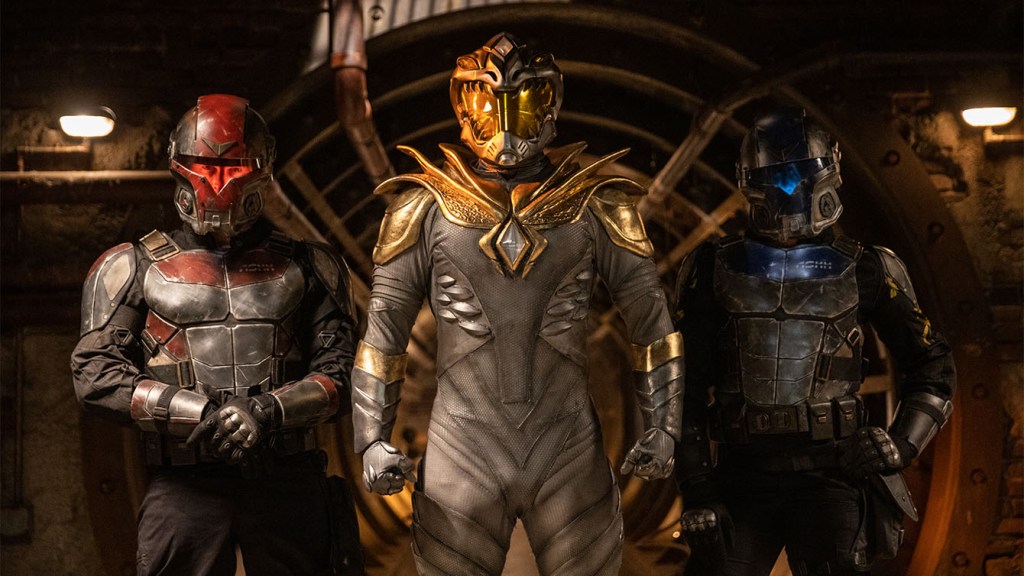
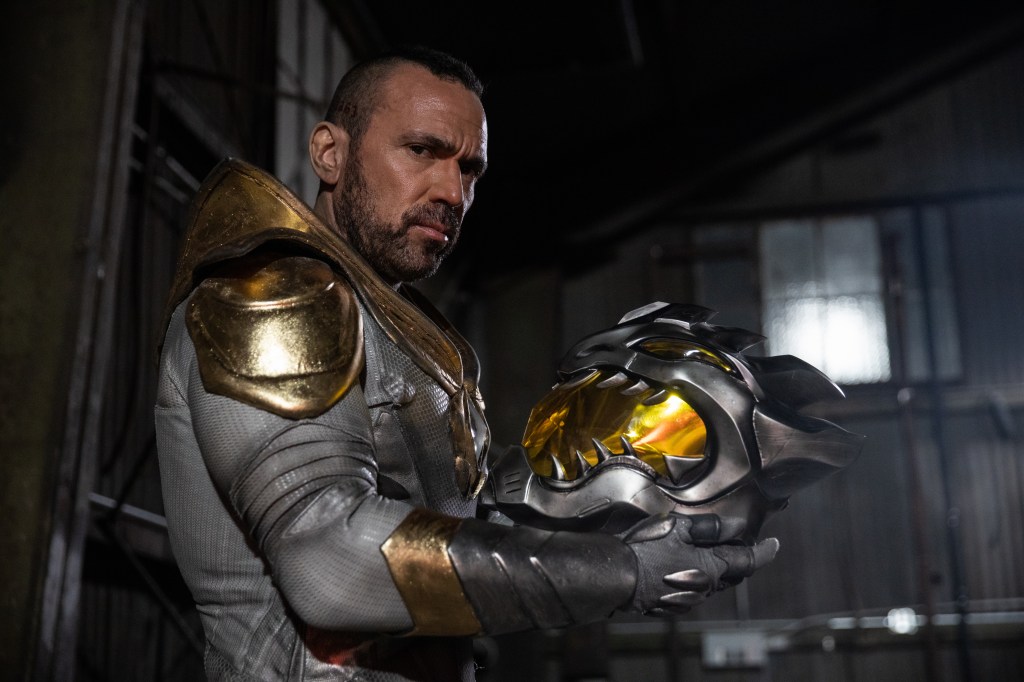
As for the suits, both Eric Reed’s White Dragon and Jai Katua’s Dragon Prime (Aaron Schoenke) look the part. The visual effects around them are more uneven: some shots work well, while many do not. One sequence has them fighting in the sky in a style reminiscent of Dragon Ball Z, and it is clear a lot of effort went into it. The following crash landing shot, however, makes it just as clear where the production ran out of time and money.
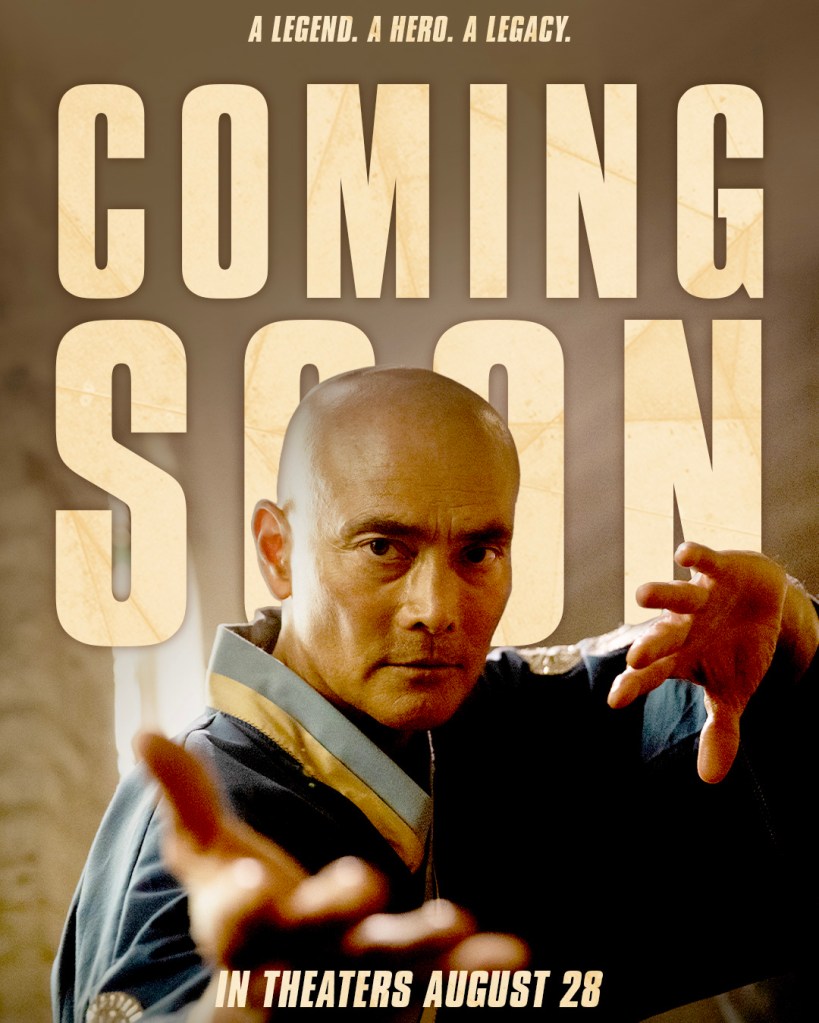
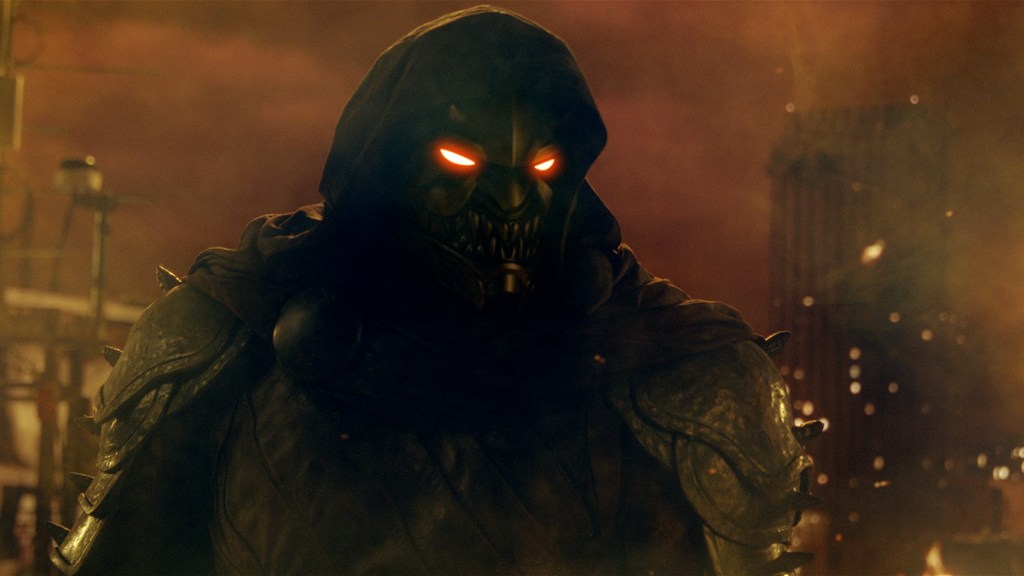
As for Jai Katua, he gets a fair amount of screentime, but unfortunately it does not serve the film well. His character’s motivations are both extremely simple and hard to follow. His tragic fall to the dark side is hardly new territory, but with a few tweaks, it could have worked. Sadly, the role may have been too much for Schoenke to carry, an issue made worse by the presence of another villain, Ashtagor, who brings more menace and weight to his brief but memorable scenes. David Ramsey and Mark Dacascos both get strong moments, but while Ramsey’s Majoy Sterns is given a meaningful role in the plot, Dacascos’s Xang mainly serves to deliver a burst of exposition and participate in a couple of fights.
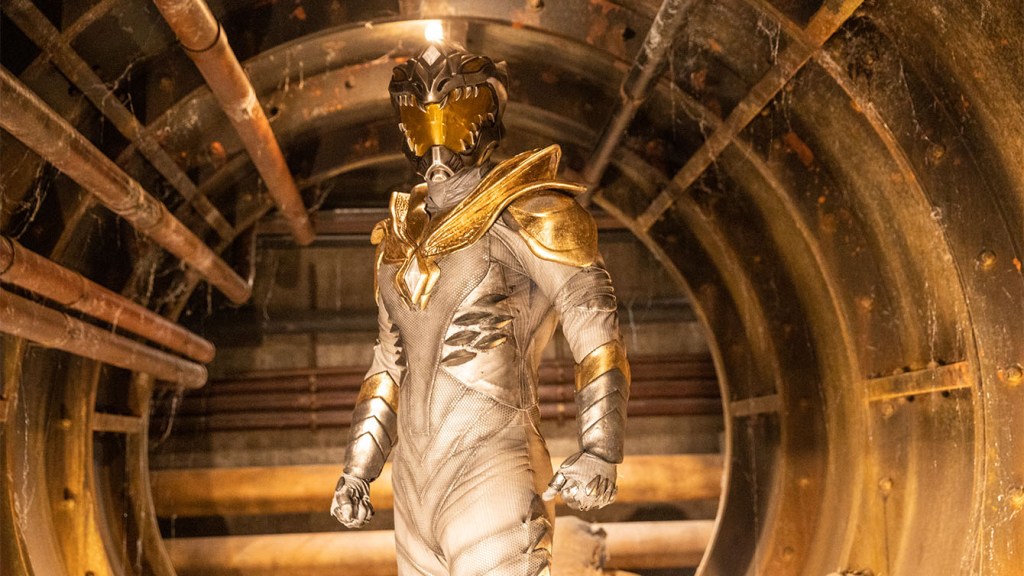
This brings me to the part some readers may have been waiting for: the fights. As mentioned earlier, Bat in the Sun built a solid reputation around 13 years ago with Super Power Beat Down, largely because of its action scenes. Unfortunately, this film does not measure up to the company’s earlier work. Repeated camera angles, mirrored techniques, and some questionable editing make the action feel stiff and at times, difficult to follow. That is especially disappointing given that the film features Jason David Frank versus Mark Dacascos, a match-up that should be memorable but ends up feeling surprisingly forgettable by the time the credits roll. Combined with the film’s overall shortage of fight scenes, the action needed to land with far more impact and showcase what the cast could do. Instead, it feels no more advanced than the YouTube videos the company was making over a decade ago.
Jason David Frank is not given much to do from an acting standpoint, and Eric Reed’s story still feels incomplete by the end of the film. The tearful reunion with his family may affect MMPR fans, but not because the film has earned the emotional payoff it seems to want. Despite its many flashbacks, the film leaves a major gap in the relationships between its central characters. We learn little about the protagonists beyond surface level details, and whenever there is a chance to give them defining moments or meaningful interactions, the focus shifts back to the antagonist. I understand the desire to present both “dragons” perspectives, but in giving Jai more of the story, the film undercuts Eric’s attempt to reconnect with his friends and family and explore what that reunion means for all of them.
Overall, Legend of the White Dragon is an extremely mixed bag. If this were not Jason David Frank’s final performance, it is hard to imagine many viewers rushing to see it. The story is uninspired, the dialogue is stiff, the fight scenes are messy, and the effects leave a lot to be desired. There is a decent concept buried underneath it all, but despite the optimistic cliffhanger the film ends on, a follow-up is no longer possible, leaving only a glimpse of what might have been.


Leave a Reply